
Plant health · 10 minute guide
How to diagnose yellow leaves
Read the pattern before reaching for fertiliser: moisture, drainage, nutrients, roots and seasonal leaf drop.
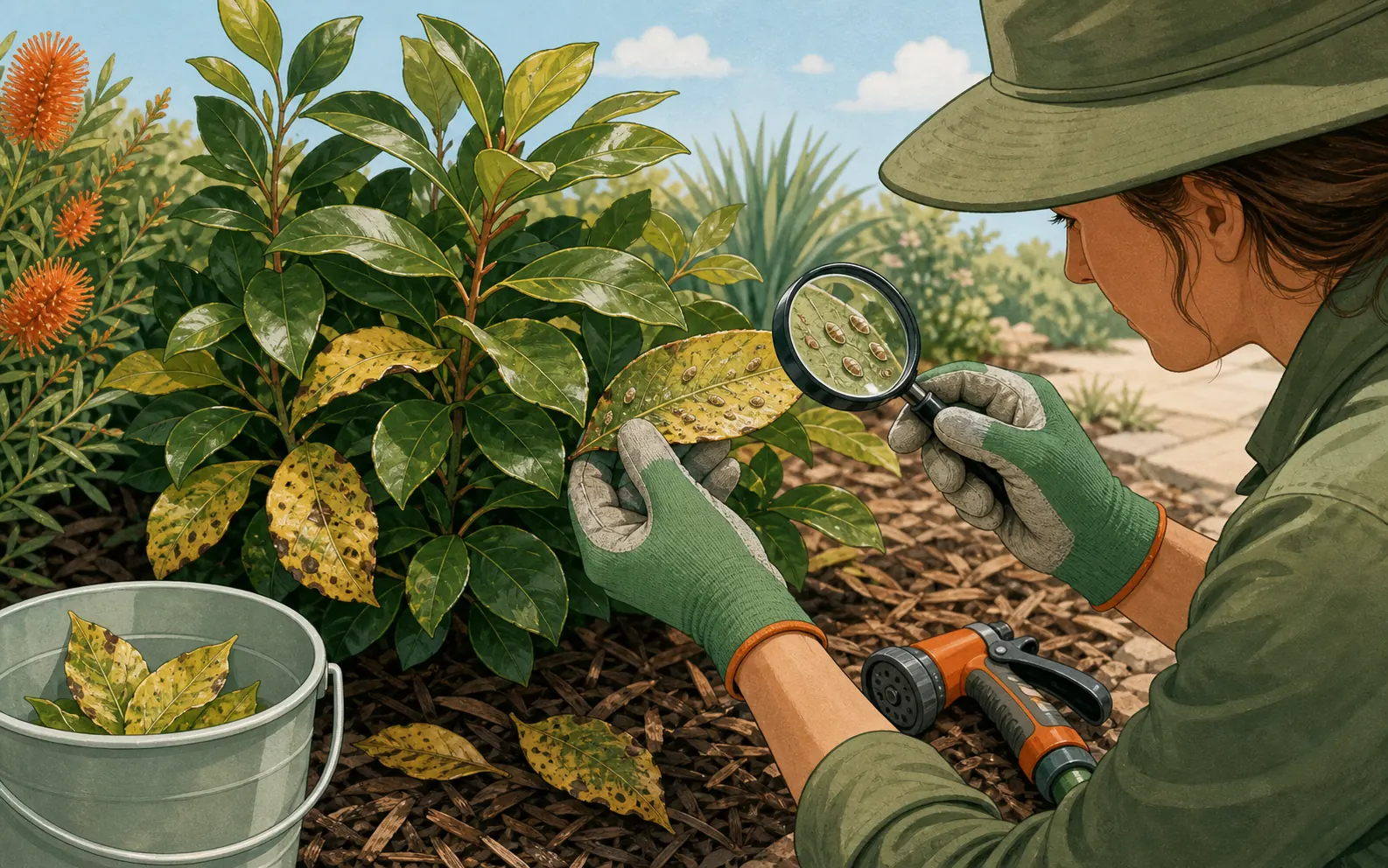
Yellow leaves are a symptom, not a diagnosis. Where yellowing begins—old leaves, new leaves, one branch or the whole plant—helps narrow the cause.
Before you begin
What you’ll need
- Trowel
- Hand lens
- Notebook or phone camera
- Optional pH test
Map the pattern
Note whether old or new leaves yellow first, whether veins remain green and whether symptoms affect one side or the whole plant.
Check soil moisture
Inspect at root depth. Both drought and waterlogging reduce nutrient uptake and can look similar above ground.
Inspect leaves and stems
Look beneath leaves and along stems for scale, mites, sooty mould, spots, chewing and physical damage.
Check the root zone
Look for buried stems, mulch against the trunk, recent excavation, compaction or circling roots. Correct the cause before adding products.
Consider normal turnover
Many evergreen plants shed older internal leaves seasonally. If new growth is healthy and the pattern is limited, monitor rather than treat.
Test before feeding
Use soil or leaf testing for persistent problems. Apply only the nutrient shown to be deficient and follow rates suitable for native plants.
Important
Common mistakes to avoid
- Do not automatically apply Epsom salts or high-phosphorus fertiliser.
- Sudden whole-canopy decline in a tree warrants assessment by a qualified arborist.
This guide provides general horticultural information for Sydney conditions. Site drainage, soil, weather and individual species requirements vary. For tree safety, chemical use or persistent plant decline, use an appropriately qualified professional.



Read next / Plant health