
Plant health · 9 minute guide
How to manage scale insects and aphids
Confirm the pest, protect beneficial insects and use the least disruptive treatment that will work.
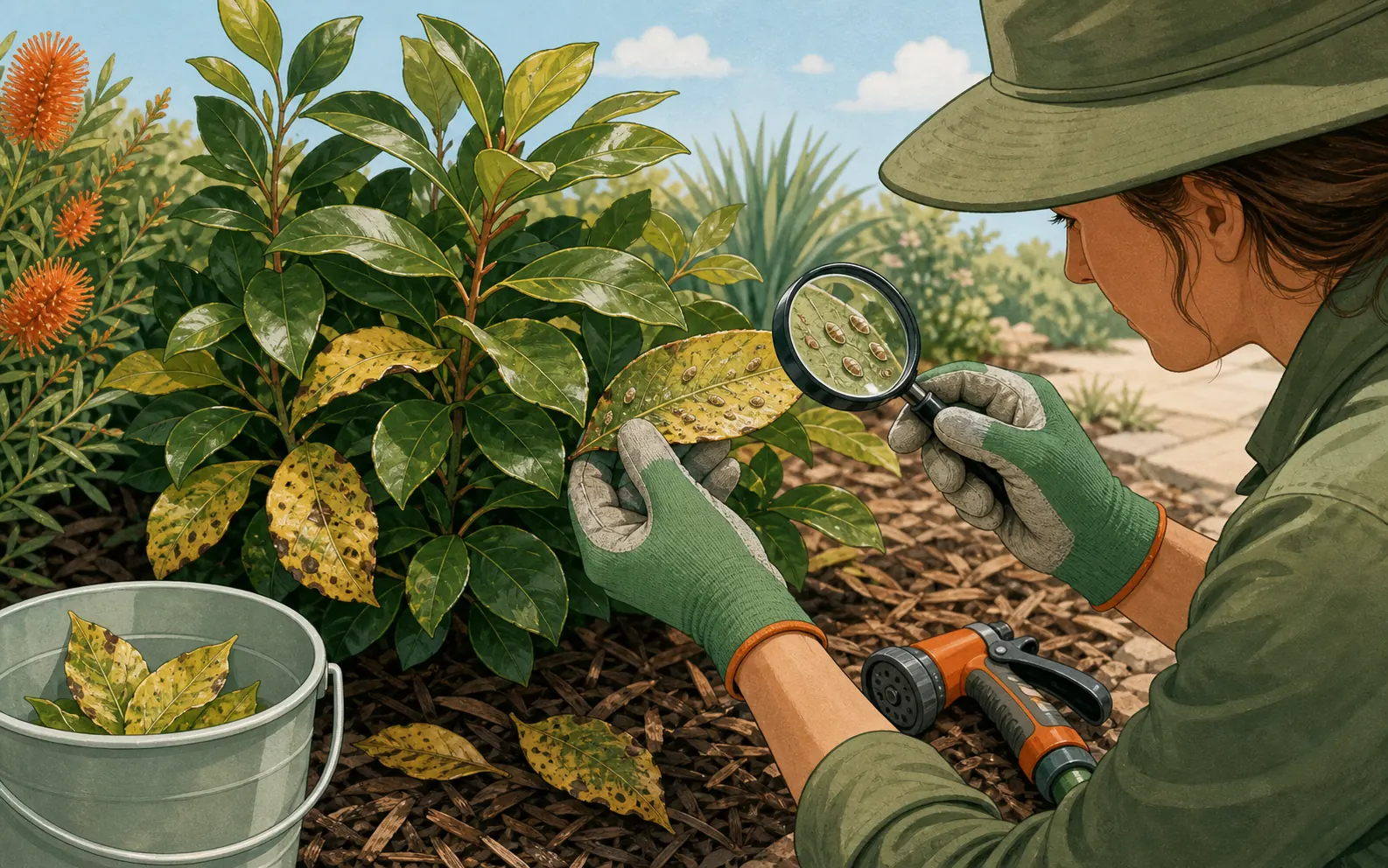
Aphids cluster on soft shoots; scale insects sit immobile on stems or leaves. Small populations are often controlled by predators, pruning and water before sprays are needed.
Before you begin
What you’ll need
- Hand lens
- Hose nozzle
- Secateurs
- Horticultural soap or oil if required
Confirm the insect
Check new growth, leaf undersides and stems. Ant activity and sticky honeydew often point to sap-sucking pests.
Assess the damage
A few insects on a vigorous plant rarely justify treatment. Act when growth distorts, foliage blackens with sooty mould or populations continue increasing.
Reduce plant stress
Correct inconsistent watering and avoid excess nitrogen, which drives soft growth attractive to aphids.
Use physical control
Hose aphids from robust plants and prune heavily infested tips into a sealed waste bag. Do not compost badly affected material.
Protect beneficial insects
Look for ladybirds, lacewings and parasitised aphid ‘mummies’. Avoid broad-spectrum insecticides that remove these controls.
Apply targeted treatment
If needed, use a registered horticultural soap or oil exactly as labelled. Cover the pest, avoid hot weather and test sensitive foliage first.
Important
Common mistakes to avoid
- Never apply oil in extreme heat or to drought-stressed plants.
- Follow the product label; it is the legal direction for use.
This guide provides general horticultural information for Sydney conditions. Site drainage, soil, weather and individual species requirements vary. For tree safety, chemical use or persistent plant decline, use an appropriately qualified professional.


Read next / Seasonal care