
Pruning · 7 minute guide
How to clean and sharpen secateurs
Keep pruning cuts clean, reduce disease transfer and extend tool life with a ten-minute maintenance routine.
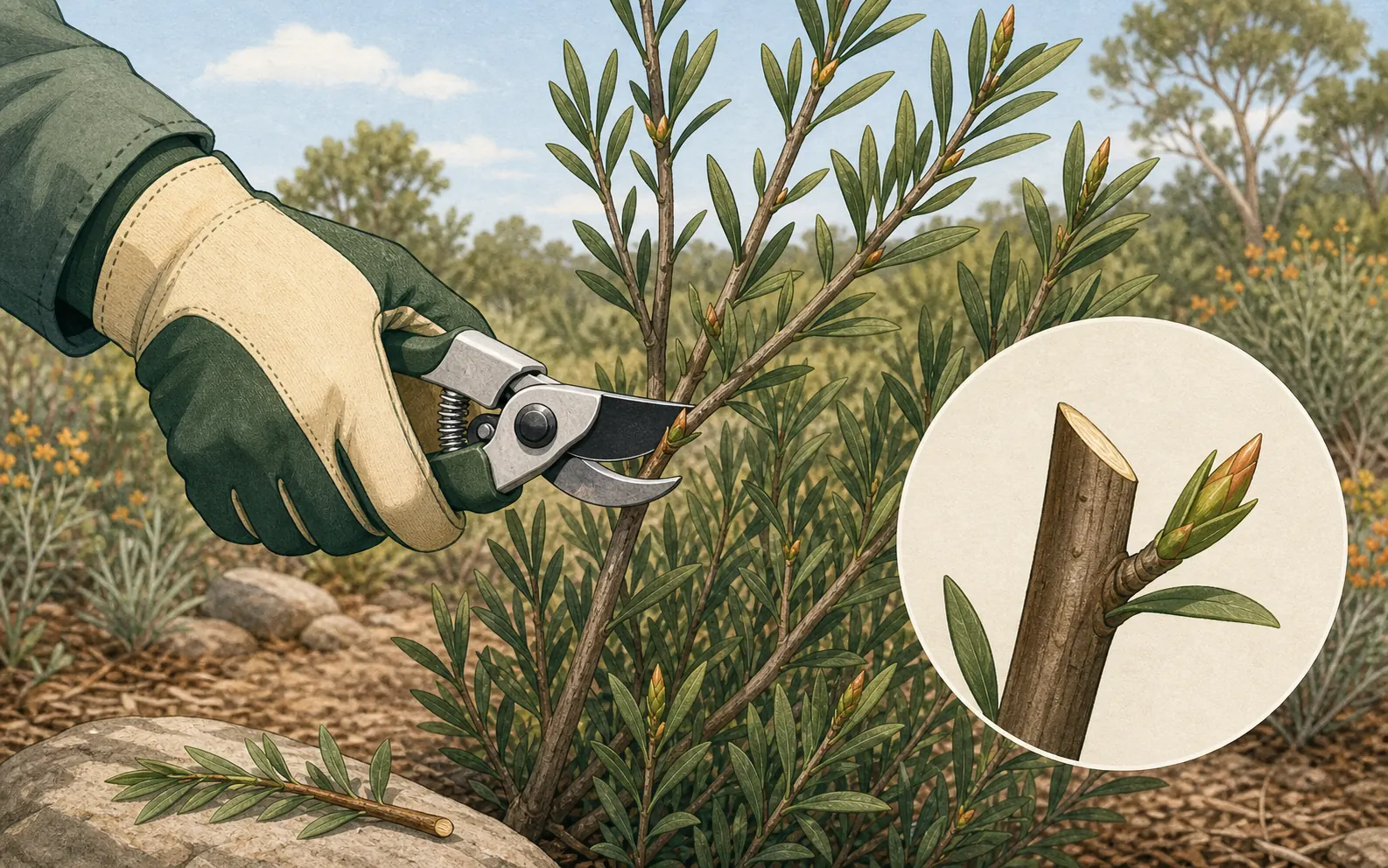
Blunt, dirty blades crush stems and carry plant pathogens. A quick clean after use and periodic sharpening makes pruning safer for both plant and gardener.
Before you begin
What you’ll need
- Stiff brush
- Soapy water
- 70% alcohol
- Sharpening stone
- Light machine oil
Lock or dismantle safely
Close and lock the tool. If dismantling, photograph the washer and spring order first and follow the manufacturer instructions.
Remove sap and dirt
Brush debris away and clean blades with warm soapy water. Stubborn resin can be removed with a small amount of alcohol.
Disinfect
Wipe blade surfaces with 70% alcohol, especially after diseased plants. Allow them to remain wet briefly, then dry.
Sharpen the bevel
Follow the original bevel on the cutting blade. Push the stone away from the edge in consistent strokes; do not grind the flat anvil face.
Remove the burr
Make one or two light passes on the flat back of the blade, keeping the stone flat.
Oil and test
Apply a drop of oil to the pivot and spring. Open and close the tool, then test on a small green stem.
Important
Common mistakes to avoid
- Wear gloves and always move the stone away from the cutting edge.
- Do not mix cleaning chemicals.
This guide provides general horticultural information for Sydney conditions. Site drainage, soil, weather and individual species requirements vary. For tree safety, chemical use or persistent plant decline, use an appropriately qualified professional.



Read next / Plant health