
Planting & selection · 10 minute guide
How to choose the right plant for the position
Aspect, drainage, mature size and root behaviour decide whether a planting works. Getting them right costs nothing; getting them wrong is paid for every year afterwards.
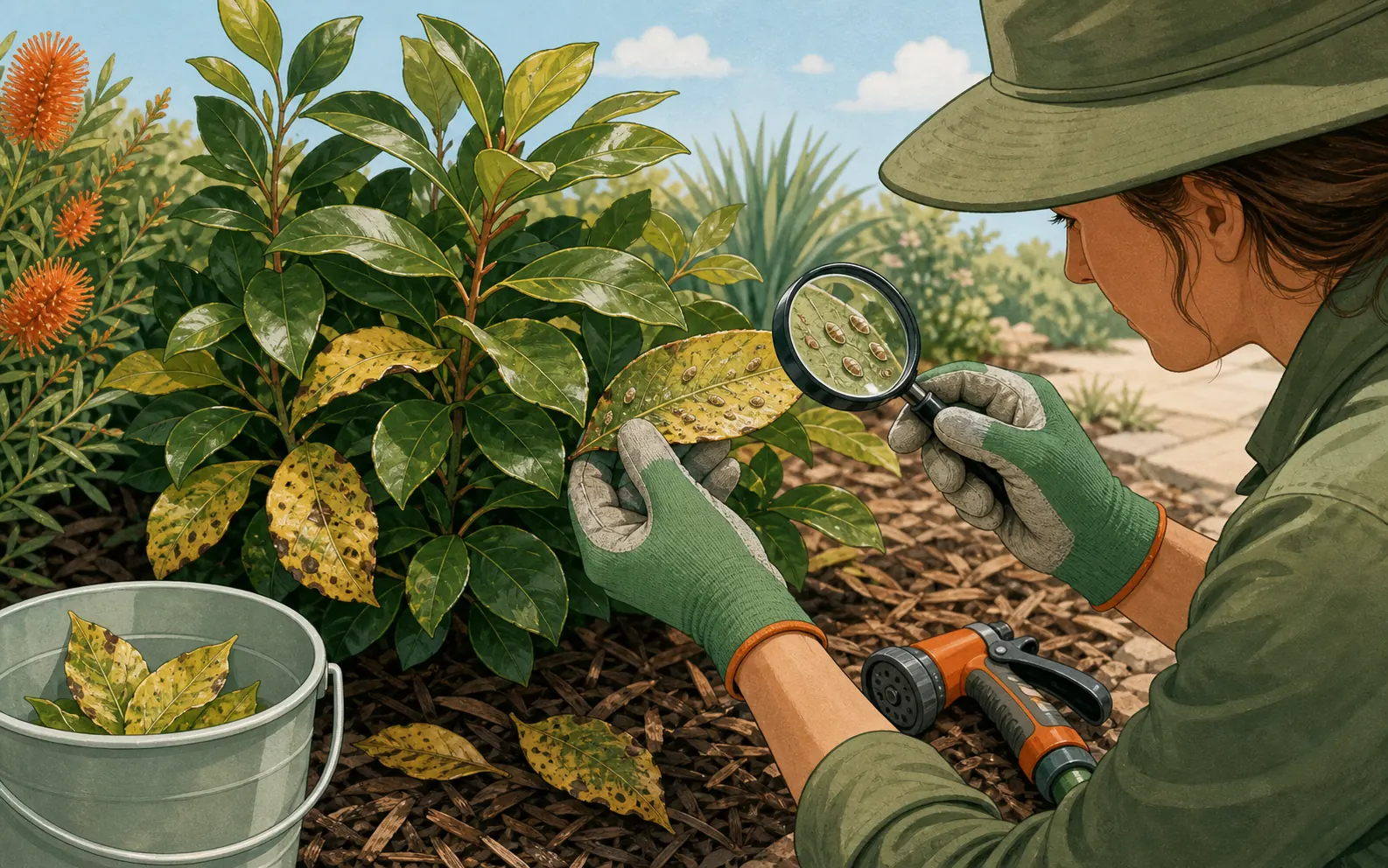
Most struggling plants are not diseased or underfed. They are in the wrong place. Selection is the cheapest decision in a landscape and the one that sets the maintenance bill for its whole life, because a plant suited to its position largely looks after itself.
Before you begin
What you’ll need
- Compass or phone compass
- Spade, for a drainage test
- Tape measure
- The plant's mature height and spread — not its pot size
Count the real sun hours
Watch the position across a day, in the season it matters. A courtyard that reads as sunny at noon may take four hours of direct sun in June. Full sun means six hours or more; part shade is three to five; anything less is shade, whatever the label says.
Test the drainage before anything else
Dig a hole about 300 mm deep, fill it, let it drain, then fill it again. If water is still standing after four hours the position is poorly drained. Far more plants are lost to wet feet than to drought.
Field noteOn Sydney clay this decides everything. Either choose plants that accept it, or raise the bed — do not fight it with a bag of gypsum.
Design to the mature size, not the pot
The most expensive mistake in planting is a plant that outgrows its position. Check mature height and spread and give them the room. A hedge held two metres below its natural height needs cutting several times a year forever.
Ask what the roots will do
Near paving, pipes and boundaries, root behaviour matters more than the canopy. Figs, poplars and willows are the obvious cases, but any vigorous tree close to a slab will find the moisture under it. Where space is tight, choose a smaller species rather than promising to manage a large one.
Account for exposure, not just sun
Wind, salt and frost narrow the list further. Coastal sites need salt tolerance; a low corner can be several degrees colder than the rest of a garden on a still night; a west wall reflects heat well past sunset.
Group plants by what they need, not by how they look
Plants sharing a bed share its water and soil. A bed mixing dry-tolerant natives with thirsty exotics will always disappoint one of them, because it can only be irrigated one way. Match requirements first, then compose.
Check it is actually available at the size you want
A species may be right and still not be obtainable at 100 litres this year. Confirm availability before the design depends on it — the alternative is a substitution decided under time pressure.
Important
Common mistakes to avoid
- Plant labels describe ten-year size, not mature size. Check the species, not the tag.
- A plant that has survived somewhere for years is evidence about that position, not about your one.
This guide provides general horticultural information for Sydney conditions. Site drainage, soil, weather and individual species requirements vary. For tree safety, chemical use or persistent plant decline, use an appropriately qualified professional.



Read next / Planting & selection