
Planting & selection · 8 minute guide
Why landscape plants are ordered months ahead
Advanced stock is grown, not stocked. What securing plants for a project actually involves, and what happens on a job where nobody did it.
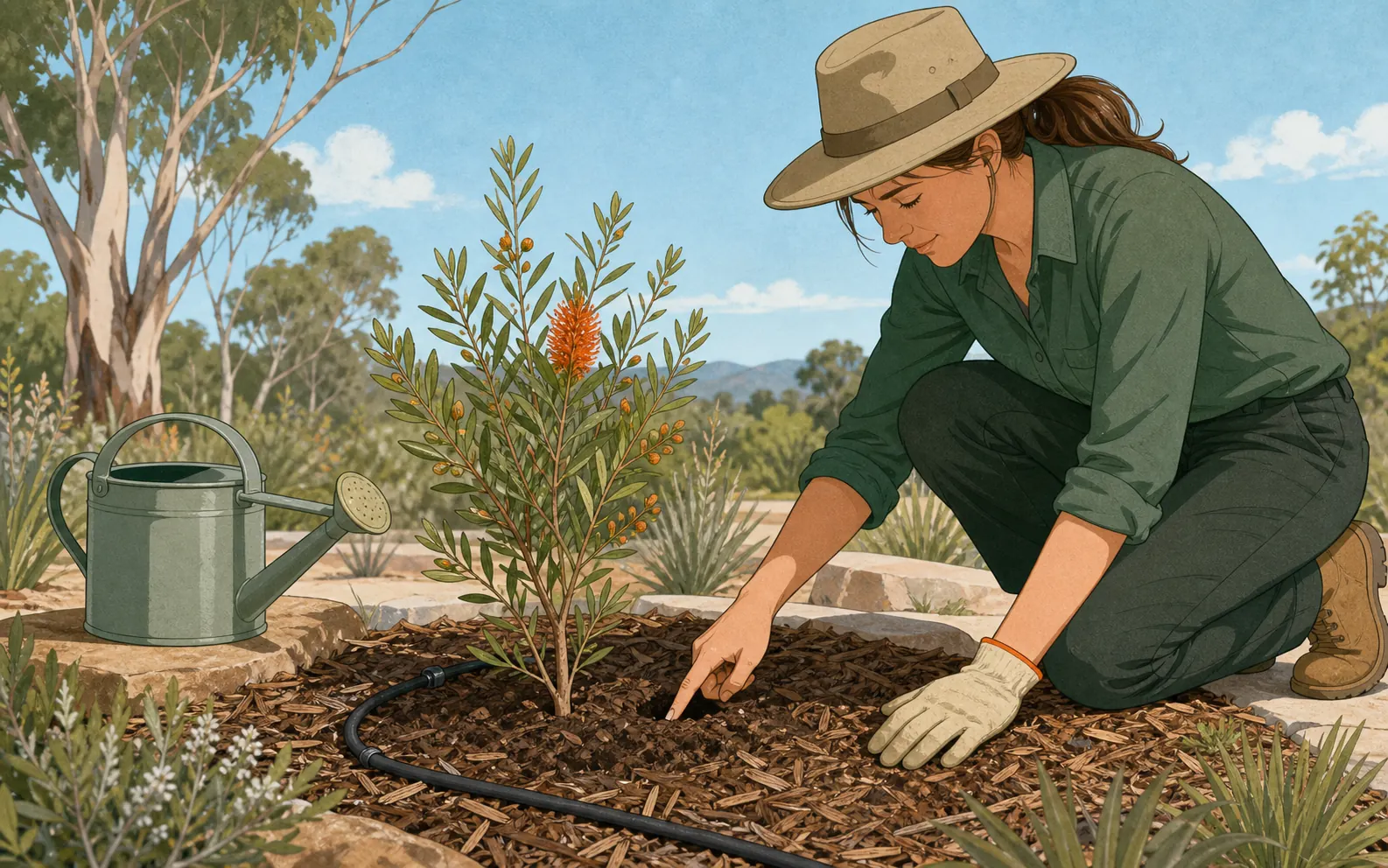
A 100 litre tree is not a product on a shelf. It is four to seven years of growing, and on any given day there is a finite number of them in the country. Procurement on a landscape package is mostly the work of making sure the plants a drawing specifies will exist, at that size, on the week they are needed.
Read the schedule as a shopping list with lead times
Tubestock and 140 mm stock are usually available at short notice. Advanced trees are not. The larger the container, the longer the lead time and the fewer growers hold it — and a schedule can specify a species that only two nurseries in the state grow at that size.
Secure stock rather than assume it
Once a species and size are settled, the stock is allocated against the project and held. That is what stops the same trees being sold to another job in the meantime. Allocation is against specific batches, so what arrives is what was inspected.
Raise substitutions early, in writing
Where a specified plant is not obtainable at the specified size, the alternative is proposed to the landscape architect before anything is ordered — a like species, a different size, or a staged delivery. Approved in advance it is a design decision; discovered on site it is a delay.
Split deliveries to match the programme
Large sites hand over in stages, and plants delivered before an area is ready have to be stored, watered and moved. Orders are split so each delivery lands close to when its area is planted.
Order against the current drawing revision
Plant schedules change through a job. Every order should quote the revision it was raised on, so that when a drawing is reissued it can be told at a glance whether what is on order still matches what is specified.
Expect availability to shape the design, a little
Season, weather and demand all move nursery stock. A drought, a wet spring or a large public project can empty a size class for a year. The earlier a schedule is tested against real availability, the more of it survives contact with supply.
Important
Common mistakes to avoid
- Leaving advanced trees until the planting stage usually means one of three outcomes: a smaller size, a substituted species, or a wait. All three are avoidable months earlier.
- Holding stock is not the same as buying it early and storing it on site. Plants held at the nursery stay in production conditions and arrive in the state they were inspected in.
This guide provides general horticultural information for Sydney conditions. Site drainage, soil, weather and individual species requirements vary. For tree safety, chemical use or persistent plant decline, use an appropriately qualified professional.



Read next / Water & soil