
Water & soil · 6 minute guide
How to mulch garden beds correctly
Choose the right mulch, set the correct depth and avoid the common ‘mulch volcano’ that damages trunks.
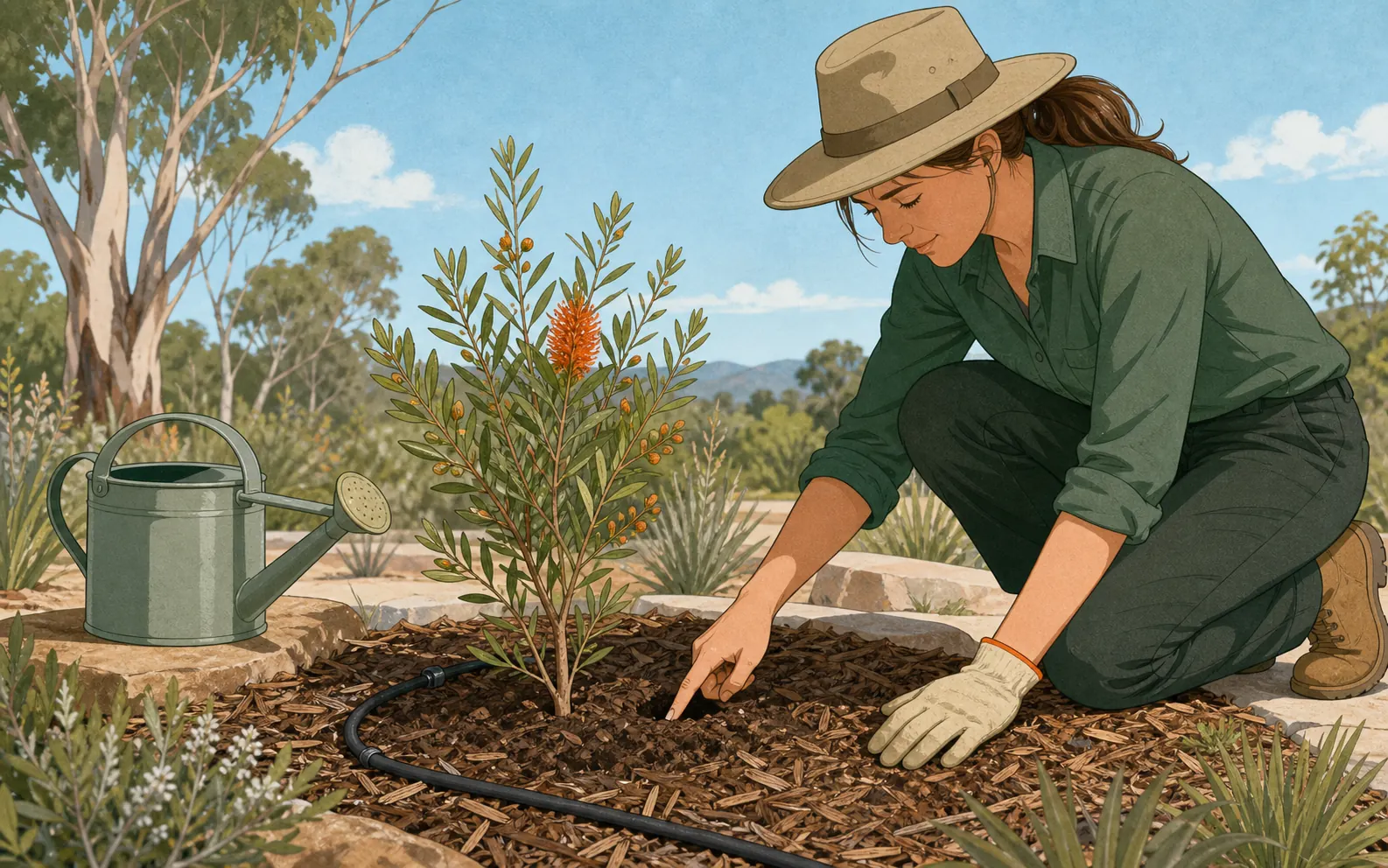
Mulch moderates soil temperature, reduces evaporation and suppresses weeds. Applied badly, it can repel water, bury crowns and create ideal conditions for collar rot.
Before you begin
What you’ll need
- Coarse organic mulch
- Rake
- Gloves
- Watering can or hose
Remove weeds first
Pull weeds and their roots before covering the bed. Do not rely on mulch to kill established perennial weeds.
Water dry soil
If the bed is dry, soak it before mulching. Water may run off a thick, dry mulch layer rather than reach the soil.
Select a coarse material
Use aged arborist chips, leaf litter or a stable coarse mulch for ornamental beds. Fine mulch can knit together and restrict infiltration.
Apply 50–75 mm deep
Spread mulch evenly. Shallower layers permit weeds; layers much deeper than 75 mm can reduce oxygen and hold excessive moisture.
Clear stems and crowns
Pull mulch back 50–100 mm from small stems and at least 150 mm from tree trunks. Keep grass and mulch away from the root flare.
Top up, do not bury
Check every six months. Restore the target depth only after accounting for material that remains—do not add another full layer each time.
Important
Common mistakes to avoid
- Never pile mulch against a tree trunk.
- Avoid fresh, steaming mulch around sensitive young plants.
This guide provides general horticultural information for Sydney conditions. Site drainage, soil, weather and individual species requirements vary. For tree safety, chemical use or persistent plant decline, use an appropriately qualified professional.



Read next / Water & soil