
Plant health · 8 minute guide
How to fertilise Australian native plants
Most natives take an ordinary feed. Banksias, grevilleas and hakeas do not—and a standard fertiliser can kill them. How to tell which is which.
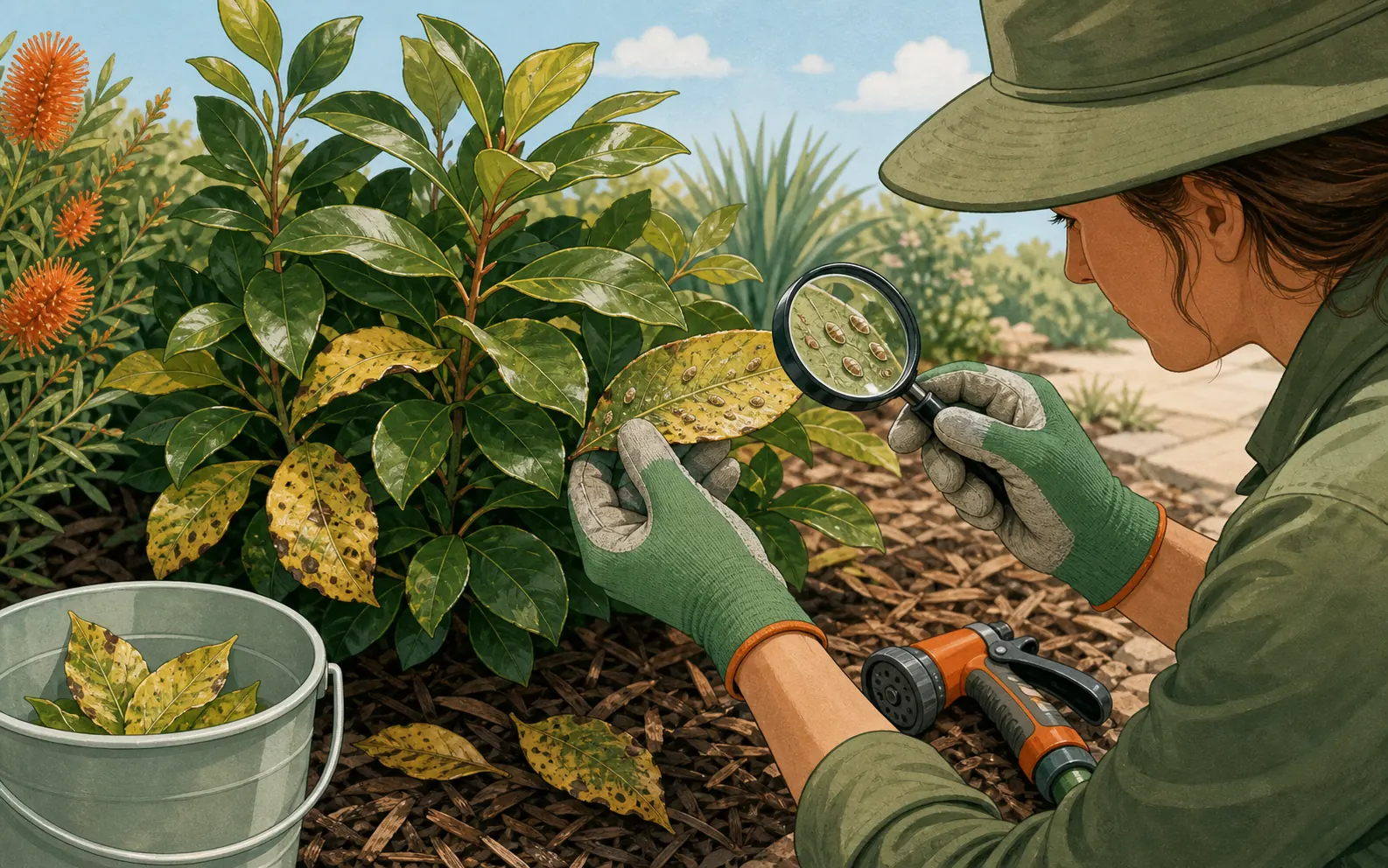
A common belief is that no Australian native will accept fertiliser. That is not right, and it leaves many plants underfed. The real division is narrower: one family evolved on some of the most phosphorus-poor soil on earth and cannot control how much it absorbs.
Before you begin
What you’ll need
- Controlled-release fertiliser formulated for natives
- Measuring scoop or scales
- Gloves
- Hose or watering can
Identify the sensitive plants first
The Proteaceae family is the group that matters: Banksia, Grevillea, Hakea, Telopea (waratah) and their relatives. Treat these as phosphorus-sensitive. Most other natives are not.
Understand why
These plants evolved in soils holding roughly 1 to 5 parts per million of phosphorus, against 50 to 200 ppm in the soils most garden plants come from. They form dense cluster roots—also called proteoid roots—that extract phosphorus very efficiently and cannot switch that uptake off when there is more available.
Read the N:P:K ratio, not the label claim
Choose a controlled-release product with phosphorus at or below about two percent. Products sold for phosphorus-sensitive natives typically sit near 1.3 to 1.8 percent P. A general-purpose or lawn fertiliser is many times that.
Feed lightly, in the growing season
Apply at the low end of the stated rate in early spring, and again in early autumn if growth is weak. More frequent light feeding is safer than one heavy application.
Keep it off the trunk and water it in
Spread the fertiliser over the root zone out to the drip line, not against the stem. Water it in so it moves into the soil rather than sitting on dry mulch.
Read the plant before feeding again
Healthy new growth and good colour mean the plant has what it needs. Feeding a plant that is struggling for another reason—poor drainage, root disease, the wrong position—adds a second problem.
Important
Common mistakes to avoid
- Phosphorus toxicity is not quickly reversible. Symptoms show as yellowing between the veins, blackened leaf tips and dieback, often weeks after the application.
- Poultry manure, blood and bone, and most all-purpose fertilisers are high in phosphorus. Keep them away from Proteaceae.
- Lawn fertiliser spread near a garden bed reaches the roots under it. Allow for the drip line, not the bed edge.
This guide provides general horticultural information for Sydney conditions. Site drainage, soil, weather and individual species requirements vary. For tree safety, chemical use or persistent plant decline, use an appropriately qualified professional.



Read next / Seasonal care